10 Tricks for Small Healthcare Marketing Teams

For all those small marketing teams who have been forced to outsource a lot of their design work, social media or content marketing we are here to save the day… and a lot of money.  We know what it is like for small teams where your marketers have to wear a lot of hats and not everyone can afford to keep on a full time graphic designer, pay for expensive stock photography or spend thousands on a social media professional.  Try these tricks to see where you can cut corners without sacrificing quality work.


1.     Hubspot

We’ll get this one out of the way first, as it’s going to be your most expensive trick. Hubspot is an awesome content marketing program that helps analyze and adjust your website’s SEO content, helps you develop content, create lead nurturing campaigns, track and qualify leads you capture online and report on the success of your SEO, social media and email marketing efforts.  They do have some special pricing, but it’s a great tool to help you learn the ropes of SEO without outsourcing to an expensive SEO service provider.

Click For: Hubspot

2.     Canva

Canva is a free, online application that helps you design graphics like Facebook ads, documents, business cards, posters etc. with no graphic design knowledge necessary. The drag-and-drop style program makes it beyond simple with customizable templates. You can upload your own images or pay for their $1 per image options, then download your creations.

Click For: Canva

3.     Death to Stock Photo

This website sends you a zip-file of 10 creative “stock” photos each month that you can use free of charge.  The images are unique and fun and much better than those expensive photos you’ve purchased in the past with the models in scrubs you see plastered all over healthcare marketing materials.

Click For: Death To Stock Photo

4.     Squarespace

This is a great, inexpensive way to create an SEO and mobile optimized website. They have tons of customizable templates and they make designing your site super simple. The lowest level option only costs $16/month and you have 24-hour support if you ever have questions.  Want to add a Youtube video to your Home Page? Easy peasy.  Want to add an e-commerce section to your site? It’s a breeze. Think you need an appointment request form on your contact page? No sweat.

Click For: Squarespace

5.     Syplur’s Healthcare Hashtag Project

If you are interested in what your industry is tweeting about but don’t have access to a robust social media platform to run reports, just check out Symplur’s website. They share insights on social influencers, trending topics related to healthcare and upcoming events like tweet-chats.

Click For: Symplur's Healthcare Hashtag Project

6.     MailChimp

Gone are the days of paying too much for email marketing programs that require coded email templates. MailChimp is free, easy to use, easy to design and actually really fun to use too. Very cool company culture. Oh yeah, did we mention it’s free?

Click For: Mailchimp

7.     Snagit

Snagit is an application you can use to screenshot documents and websites then annotate and edit. You can do some minimal design work in the program too.  It’s free for the first 30 days then you have to pay a whopping $49.95 and it’s yours for.ev.er.  (Bonus: If you’re only snagging website images and annotating you can download the FREE Chrome extension Awesome Screenshot.)

Click For: SnagIt

8.     Intern Match

Looking to bring some fresh insight to your team but not sure where to start?  Your communities local universities or colleges are great resources, but if you also want to post online, don’t pay for a subscription on Monster.com. Create a free account with Intern Match and your first few job postings are FREE. Bonus: You’ll get some AWESOME applicants from far and wide.

Click For: InternMatch

9.     Tweetdeck

This is a free and very intuitive application provided to you by Twitter. You can schedule tweets to go out throughout the week, track keywords and lists of users all in one place. No expensive social media monitoring software necessary.

Click For: Tweetdeck

10.  Woobox

Some social media campaign programs can cost up to $150 for a simple, one month campaign, even if you only have 100 followers. Woobox makes it easy and cheap to create photo contests, caption contests and even Pin-It to Win-It campaigns starting at just $15 per month.


Click For: Woobox

Using Video for Healthcare Education

Healthcare marketing genius Dan Dunlop is always sharing valuable insights on his blog and providing us with ideas for how to better engage with patients online, but he’s outdone himself this week. He shared a couple of videos from his daughter’s school administrators delivering an awareness message to the students’ families about head lice.


They were able to turn a seemingly mundane and boring topic into something, dare we say… magical?

VIDEO: https://www.youtube.com/watch?v=dKCHS8UP8Mg&feature=player_embedded


The "Lice, Lice Baby" spinoff was created following their original, wildly successful video announcing school closings due to ice. We have to give these guys kudos for pulling inspiration from Vanilla Ice and daring to improve their messaging by stepping out of the box a little.

Simple messages, no matter how important can easily get skimmed over in the hustle and bustle of everyday life. Sometimes we forget that using video to do a little something different can make all the difference.  Working in radiology, we are always trying to find unique ways to express to patients and referring offices what makes our centers the better option.  We rely on “crutch-terms” like ACR accredited, 24-hour turn around time and same day appointments to convince people of our expertise, but they end up falling on deaf ears regardless of the importance.

Consider how you could use video to put a new spin on the components of your care and service you are regularly marketing to your community. Don’t just rely on the same flyers, tri-fold brochures or conversations to reignite interest in your center. 

Back to the Basics: Radiology Marketing

We’re always trying to think of innovative and creative ways to market our radiology practices to patients and the referring community, but sometimes it is best to take a step back. Go back to the basics. Marketing is about finding the things that make your practice memorable and showcasing those attributes.

Sometimes we get ourselves in marketing ruts though, by focusing on the wrong things about our practice. By thinking that the only benefits of our practices are related to accreditations or technology, we are forgetting about the components that truly make us unique.

Think about what it is like for a patient coming to your office. What are some of the things your staff does to make that patient feel comfortable and valued? How do you make sure that they have a positive experience? Starting today, think about some of the little things you can be doing to rebrand your patient experience.


Here are some ideas to get you started:

            Opening Doors

Marigay McKee, President of Saks Fifth Avenue, with her doormen.

Marigay McKee, President of Saks Fifth Avenue, with her doormen.

Saks Fifth Avenue is in the process of rebranding their Manhattan store by focusing on their shoppers’ experience. This started with the reintroduction of doormen, which brought the department store’s sense of luxury back. Now we don’t expect you to be hiring doormen for your imaging center, but if you can go a little out of your way to open the door for a patient you see coming in from the parking lot, do it.

 Introductions

When a patient is called back from the waiting room, you’re meeting that patient for the first time.  Introduce yourself to them. This is something you do when you meet people in scenarios outside of your imaging center, so why wouldn’t you do the same thing inside your imaging center?

Radiologist Availability

If your radiologists can be available by phone to consult with referring offices that can make all the difference in the world. This is one of the services that not all imaging centers can provide, but goes a long way.

Online Scheduling

Sometimes patients can’t get on the phone to schedule an appointment in the middle of the day, whether they are at work or just too busy during normal hours. If you can build in an online appointment request page to your website, that can be so useful to patients and referring physicians.

Clear Pricing

As a patient shopping for affordable radiology procedures, it can be very challenging to find what you are looking for because practices don’t want to disclose their costs.  If no one else in your area is participating in price transparency, be the first one to join the party. Patients will appreciate your effort.


If your practice is already doing things like these, then don’t be afraid to let patients and referring offices know. If you aren’t focusing on the little things, then you have plenty of room to improve and let the community know that you’re changing your ways!

12 Tips for Optimizing Your YouTube Videos

Points for you for exploring video marketing!  You have scripted, filmed and edited your video, now all you have to do is get it out to the world. Beyond sharing your new video on your organization’s Facebook page, website and blog- you should also be sure to optimize your video on YouTube so that others on the interwebs can find your video.


Here are some tricks for making sure each YouTube video you upload is optimized:

  1. Key terms should be included in the video’s title. Focus on terms that patients would be using to search for your services on Google.
  2. Any branding terms should be at the end of the video’s title.
  3. Your video’s title should be under 66 characters so that it can be properly viewed in search results.
  4. Sometimes it helps if the word “video” is in the title.
  5. In the video description area, write a one to two sentence description of what the video is about.
  6. In those one to two sentences, be sure to include appropriate and relevant search terms along with branded key terms, i.e.: your practice name.
  7. Makes sure to include a URL linking to your website at the beginning of the description. This way, even if they only read the first line, they will see the CTA to explore more on your website.
  8. Tag your video so that search engines, YouTube and viewers know what the video is about.
  9. Key phrases should go in quotes, ex: Tampa vs. “Tampa radiology center” when using tags.
  10. Transcribe your videos with the script. It helps with SEO and gives your video the ability to include closed captioning. If you don’t want to show the script, simply disable the feature.
  11. Annotations can also be used for calls-to-action, ex: "Learn more about MRI’s" or “Read our spotlight on Dr. Smith.”
  12. Don’t over do it on the annotations.


Now, every video can’t have as much viral success as the classics, but if you have valuable and engaging content there is nothing stopping you!

RBMA Hot Topic: ICD-10 Implementation Perception

RBMA’s Hot Topic Question of the week relates to the impending implementation of ICD-10. For the last year the date of implementation has continued to be pushed back, leaving providers unsure when it will really go into effect.  Most providers seem to be pleased by it’s delay because it means they don’t have to learn the new coding system, but it is only a matter of time before we all will need to adapt to the ICD-10 protocols.


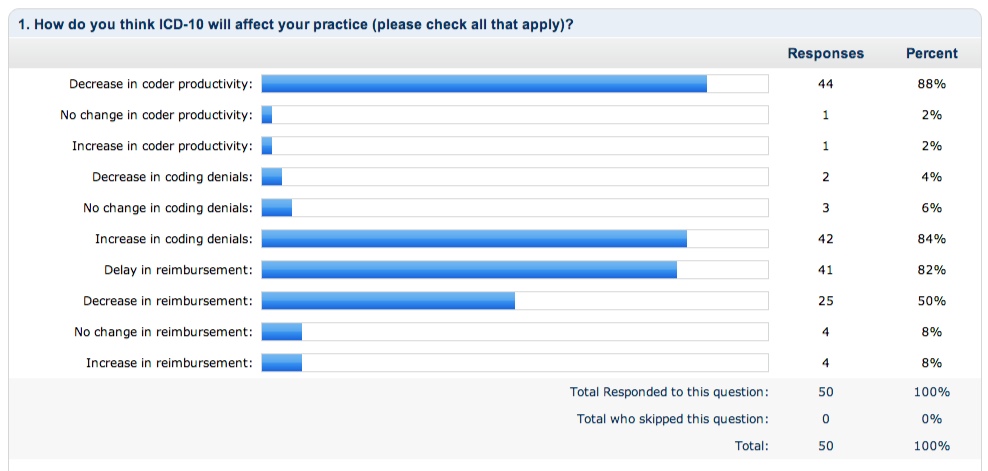
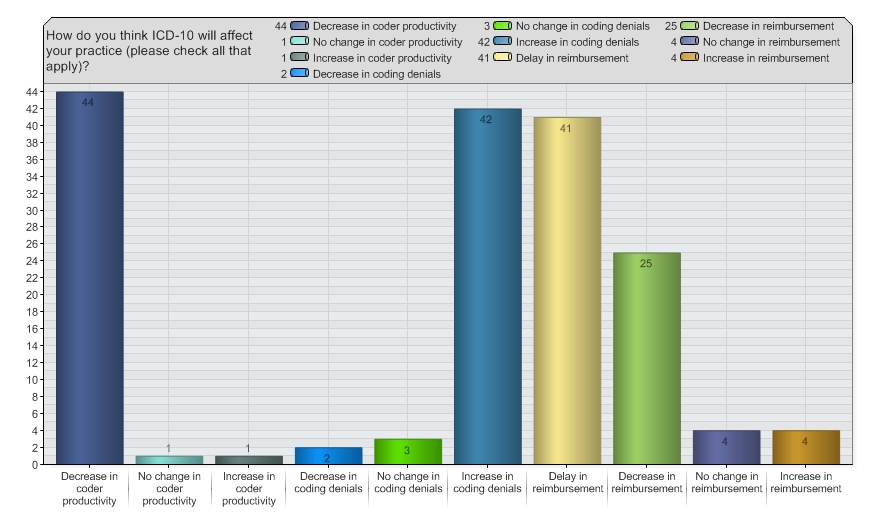
The RBMA took to the forums to find out for real how health care professionals in radiology feel about ICD-10 and how it will affect their practice.  The survey is still running, but the largely negative response is overwhelming.  Participants were asked, “How do you think ICD-10 will affect your practice? Check all that apply.”  Options included:


  •  Decrease in coder productivity
  • No change in coder productivity
  • Increase in coder productivity
  • Decrease in coding denials
  • No change in coding denials
  • Increase in coding Denials
  • Delay in reimbursement
  • Decrease in reimbursement
  • No change in reimbursement
  • Increase in reimbursement

Participate in the survey > Click Here

Currently, the most popular responses reflect the belief that implementation will bring decreased coder productivity, increased coding denials, delayed reimbursement and decreased reimbursement overall.


So, what’s with the all this ICD-10 hating? First of all, there are SO many changes with the new codes. (Review them all here: ICD-10 Education) It is intimidating, especially for those who are already not experts with ICD-9 coding.  Many practices and organizations have kept their revenue cycle management in-house for so long, in an effort to cut costs and keep control, but that trend will come to an end. 

In theory, ICD-10 should help physicians improve their reimbursements and cut down denials, however that is only if the codes are used appropriately. Heed the warning signs and start preparing now, because ready or not… ICD-10 is coming.