
Radiologist Archetypes & Mythbusters for Healthcare Marketers

Last week our team of experienced healthcare marketers sat down with Jayson A. Lord, MD to get an inside look at what makes radiologists tick.  Dr. Lord, who lives in Tampa, Florida and performs radiology for practices nationwide, discussed ways to understand radiologist motivators, tricks for how to get the good doctors involved with marketing and physician relations and spent time going through “Radiologist Mythbusters” which was a session where marketing representatives were able to state their radiologist assumptions in an open forum and discuss ways to overcome them.

One of the biggest questions Dr. Lord wanted to address was why radiologists often choose their profession. “Radiologists are typically very analytic thinkers, they love puzzles and problem solving. Radiology is the ultimate puzzle,” he said about his profession.  Getting to the root of why people choose certain paths in life intrigues Dr. Lord, and he drew from components of Jungian archetypes to explain physician motivators and the individuals who contribute to a practice’s success. The four quadrants of Jungian archetypes, which most people fall into, are The King, The Warrior, The Magician and The Joker.  As a King; individuals are filled with confidence and authority which can be a very good or very bad thing depending on the individual. The Warrior serves as a dutiful worker, while The Magician is able to utilize tricks and an engaging personality to “make things happen.”  The Joker is traditionally less motivated and looked at as the hopeless romantic of society. So which category does your radiologist fall into?

Lord says that most radiologists identify with the Warrior archetype. They want to show up to work, get through their stack of reads and move on with their systematic schedule.  Most radiologists that own their own independent practices, like Dr. Lord, fall into The King category, which can have both positive and negative influences on their work, but oftentimes responsibility rolls up the hill to the king, and most radiologists do not want to step out of their warrior roles to take on other responsibilities, leaving practices without a leader.

In order to get your radiologists more involved with marketing efforts, Dr. Lord says the key is finding your radiologist magician however. Traditionally introverted, radiologists love regiments and they need to be untrained from the clinical paradigm they’ve adopted in order to step outside of their comfort zone. In a group of radiologists, a magician can usually be found and if they are open to working with your marketing team, it can make all the difference in the world.

The key to getting started is setting up an opportunity for your radiologist to engage in a conversation with a referring physician where they will walk away feeling positive. After having a few encounters that go well, it will be less heartbreaking when they go on more challenging meetings.  It would be beneficial to set up a lunch with a clinical topic in mind to discuss for more introverted radiologists, but as long as the referring physician is engaging, a feeling of positivity can be fostered. We can compare this to someone learning to cook. If all you’ve ever made is grilled cheese, you would not delve into your first cooking adventure aiming to perfect soufflés or prepare a full Thanksgiving meal. You would start with the basics: baked chicken, some steamed veggies and pasta. The same can be said about easing radiologists into marketing efforts.

As healthcare marketing professionals, it is important to be able to read people, understand what their needs and motivators are, and to use that information to grow.  Figuring out what kind of radiologist you work with and finding your internal Magician could lead to exponential levels of success for your center.
Radiology's Future: Our Specialists

A recent survey performed by the American College of Radiology concluded that the job prospects for radiologists finishing their residencies have wavered over the past few years, but by 2014, the career playing field should be leveled.

Back in 2011, there were about 1,241 radiologists that were hired but only 1,103 in 2012.  Researchers project that in 2014, there should be back up to around 1, 227 positions.  Within the same study, researchers found that there is about one job per every radiologist that finishes their studies, but that job might not necessarily be in an ideal location or in their desired subspecialty.  The South, West, Midwest and the Mid-Atlantic states are the areas with the highest number of open radiologist positions, meaning that areas up North are practically impossible to find positions in after residencies are completed.

One positive thing about the millennial generation is that they are entering the work place with a stronger aptitude and openness towards change, allowing them the freedom to explore new regions for work and new frontiers of specialties.  Typically, graduates don’t mind relocating and are quick to adapt to their new surroundings.  Also, most of the graduates are open to going into a different field than they originally planned, which is something more seasoned radiologists would be more apprehensive about.  

The job market is progressively getting better each year for new radiology graduates, and it will continue to grow over the next few years, so it’s important for those specialists to stay on the radiology warpath if that is where their passions lead them. Industry changes may influence some, but we can still be confident in the future of our industry.

BONUS: Understanding Radiologists… in song: https://www.youtube.com/watch?v=qaGV3-INNk8

Emotions & Loyalty: Root of Patient & Physician Decisions in Health Care

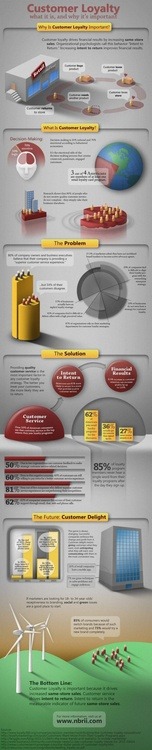
People are people, whether they are identified by their career or their role in the health care process. So whether you’re dealing with a referring physician or a patient, it’s important to consider emotions, their role in the sales process and how they drive and destroy value.  One of the most valuable emotions to have in our business is loyalty. Loyalty is what providers work towards with referring physicians and what they’re trying to earn from their patients, and in a society where health care is catching a lot of heat for a lack of transparency, loyalty and honesty are key.

Lloyd Banks said, “I take things like honor and loyalty seriously. It’s more important to me than any materialistic thing or any fame I could have.” It’s funny because a lot of practices think that the best way to attract referrals is to give gifts and tip-toe through shades of gray, tickling the line of propriety and Stark Laws, whether they can afford it or not.  Matt Schneider says that when your relationships are built off of gifts however, you’re only as good as your next present. Don’t think about yourself and your service from a strictly monetary scope, consider your value, because it is more important than any materialistic thing you could provide, as long as you’re not handing out keys to new Ferraris.

In Colin Shaw’s program Beyond Philosophy, he points out that in sales, professionals brand their customer experiences with their own emotional signatures. Over 50% of a customer’s experience relies on how they feel, which will then either drive or destroy their decision path. With 20 emotions ranging from happy to trusted to disappointed to neglected; your perception of value hinges heavily on your customers’ emotions, indicating whether they will become long-term, short-term or no-term customers. In health care it is hard to look at patients as “customers” but their emotional drive is intrinsically the same.

image (See image here: http://pinterest.com/pin/177399672791761465/

It makes sense that in health care, more than in any other industry, emotional-selling plays a vastly important role. From a patient perspective, the health care industry is a confusing, money-hungry monster that is supposed to be able to fix the illusive medical issues they face before they die. They are operating in a state of flat out fear. Transparency in the system is a good start to helping patients sort through their emotions, aiding in their comprehension of what happens with their doctors and the bills that come out of their appointments. This is why it’s important for health care marketers and physicians to enter the conversation that patients are having already in their minds about price and quality.

The jump from reaching and making an impact on referring physicians is not all that far off as emotions go. Doctors have their own set of worries, whether it be about; patient loyalty, patients wellness, happy staff, having enough time to get everything accomplished, all while making money and keeping their practice alive.  This is especially challenging for independent physicians that don’t have the support of a hospital system.

Trends towards independent physicians getting bought out by hospital systems have cut down the number of private practices and many physicians and patients have been left wondering why hospital-owned physicians decided to sell.  The root of all patient and physician decisions resorts back to loyalty; emotional and financial support and security. With the changes that will occur over the next few years in our profession, we predict the rise of patient loyalty to independent physicians due to their ability and freedom to adopt transparency and patient-focused quality care.

Consultative Health Care Sales and Marketing

Every sales pro has their own unique take on the sales process and has their own way of attracting new business.  Working in health care, the sales process is a uniquely laser-focused experience, which means developing new leads requires more care.  The difference between selling a product and patient experience is that it is a continued process and not a one time sales relationship, making the consultative process exponentially more important and valuable. 

It is imperative to consider that the focus should always be on your potential lead’s needs, rather than your own. In most cases of health care marketing, your lead is a staff member at a referring office. By conducting a needs-analysis and sorting out those individuals’ “haves” “wants” and “needs” you will be in a better place to provide guidance and earn their trust as a leader in the market. Your goal must always be to get your lead to explain their needs because if they are talking about their goals and what they need to accomplish them, you’re not wasting their time, rather you are being of value to them.

Your consultative process does not have to be an exact science, as each of your referring physician offices will have different needs, but it is important to consider the following steps:

  • research
  • asking
  • listening
  • teaching
  • closing/continuing

Research:

This stage of your sales process is one of the most important, as it is vital that you do the appropriate research to gain lead intelligence on their situation. Once you’ve gathered data on your potential client or in our world, referral source, you’ll be in a better place to help them in the future.

Asking:

It’s important to conduct a needs-analysis, asking questions that require open-ended answers.  This gets them talking about their goals, plans and challenges. When you understand the issues they face, you can propose solutions to mend their problems and you won’t be selling them on services that they do not need.

Listening:

Do not just ask your referring offices consultative questions and not take into account what their responses were. It is important to be an active listener and use a CRM program, like Salesforce to keep track of your conversations and their needs.

Teaching

Your goal should be to help your referring offices no matter what.  You want to prove to them that you will do everything you can to help them find success, which begins before they even send one patient to you.

Closing/Continuing

In a regular sales process, the close is the last step, however when what you are selling is personalized patient care and the opportunity to serve as an extension of a referring physician’s practice, the sales path is more of a cycle in that it does not end.  This process becomes a relationship, which should feel natural and mutually beneficial.

 image